Accept the carrier without drama
Turn the worst day of the year (vet visit) into a calm routine.
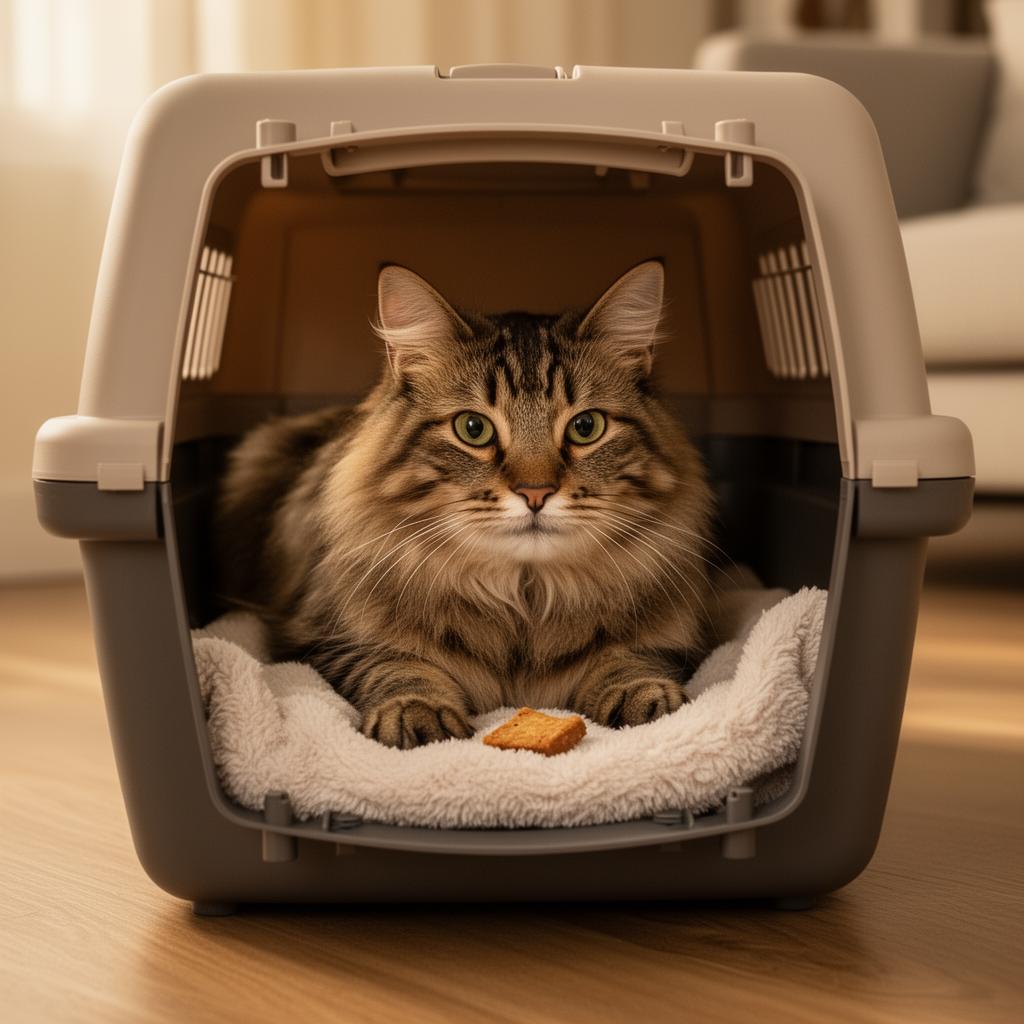
Most cats associate the carrier with "I get kidnapped and taken to the horrible place". Result: chases, scratches and a stressed cat at the clinic. Fixable with 4 weeks of desensitization.
What you get
- Vet visits without a fight
- Safer car trips
- Fast evacuation in emergencies
A cat that enters the carrier alone cuts both his and your life stress in half.
Before you start
- · Knows his name
Materials
- · Hard-shell carrier with top opening (better than front-only)
- · Blanket or clothing with your scent
- · Feliway pheromone spray
- · Premium treats
Step by step
- 1
Carrier always visible
Take it out of storage and leave it open in the living room as a piece of furniture. Stop it being "the thing that appears out of nowhere".
- 2
Make it cozy
Inside: blanket with your scent + Feliway. Drop treats inside twice a day without touching it. Let him enter on his own.
- 3
Close the door briefly
When he enters calmly, close the door for 5 seconds, open and treat. Build to 10, 30, 60 seconds across sessions.
- 4
Lift and move one meter
Close door, lift carrier, take 3 steps, set down, open and treat. Build tolerance to motion.
- 5
Short car trip
5-min car ride and back home WITHOUT going to the vet. Do this 3-4 times before the first real visit.
Common mistakes
- Pulling out the carrier only on visit day
- Wrestling him in
- Soft carriers without structure (deform and scare him)
If something isn't working
Still resists after 4 weeks
→ Switch to a top-opening, quick-disassembly carrier. Some cats never walk in but accept being placed from above.
Pro tips
- At the clinic, don't pull him out: let the vet examine inside whenever possible.
- Cover the carrier with a towel during travel: reduces visual stress.
Deep dive
Carrier training is one of the highest-ROI investments in feline wellbeing. A cat that enters voluntarily lowers cortisol before, during and after vet visits, leading to better diagnostics and less sedation needed. Gradual desensitization over 3-4 weeks is the only long-term effective technique.