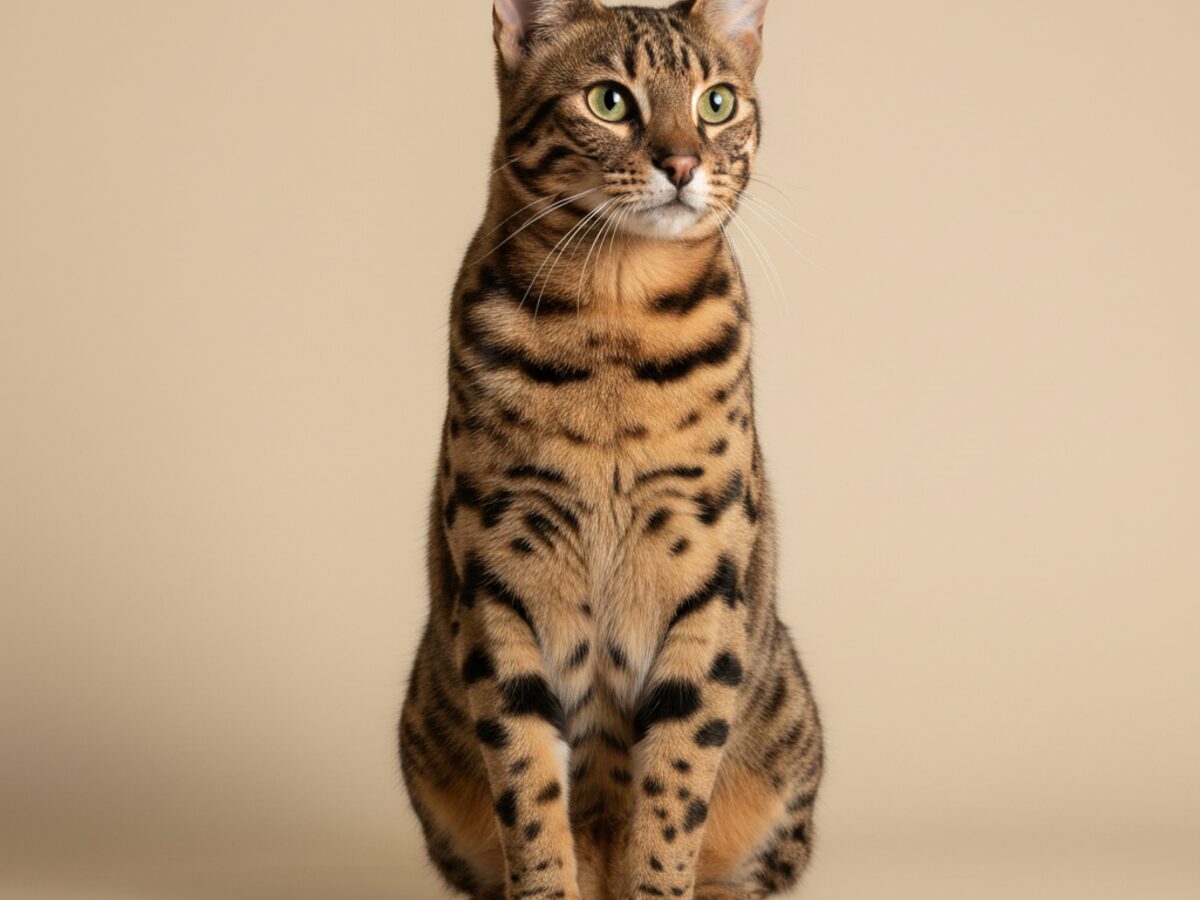
Ocicat
"The Ocicat: A miniature leopard with a heart of gold!"
Overview
Discover the fascinating world of the Ocicat, a cat breed that will captivate you with its wild appearance and domestic heart. At FamiCats.com, we offer you the most complete guide to this very special feline. Learn about its incredible origin, born from the combination of Abyssinians, Siamese, and American Shorthairs, resulting in a spotted cat that evokes the majesty of the savanna, but without a drop of wild blood. Its intelligence and trainability make it an ideal choice for active families and cat lovers who seek an interactive and playful companion. You will learn about its vibrant personality, how it integrates fabulously with children and other pets, and the importance of early socialization for a happy and well-adjusted Ocicat. We explore its specific care and well-being needs, from nutrition guidelines that support its energy to exercise routines that keep its mind and body in shape. You will understand why the Ocicat thrives with mental and physical stimulation, and how you can provide it through games and environmental enrichment. We also cover crucial aspects such as its health, highlighting necessary precautions and the importance of a responsible breeder, along with tips for grooming its short, shiny coat. Finally, we will give you a clear insight into the costs associated with Ocicat ownership and key points to consider before welcoming one into your home. With detailed pros and cons, you will know if this wonderful breed is the perfect companion for your lifestyle. Dive into the adventure of owning a miniature leopard that will offer you years of love, play, and lively conversations. Get ready to fall in love with the intelligence and unique charm of the Ocicat!
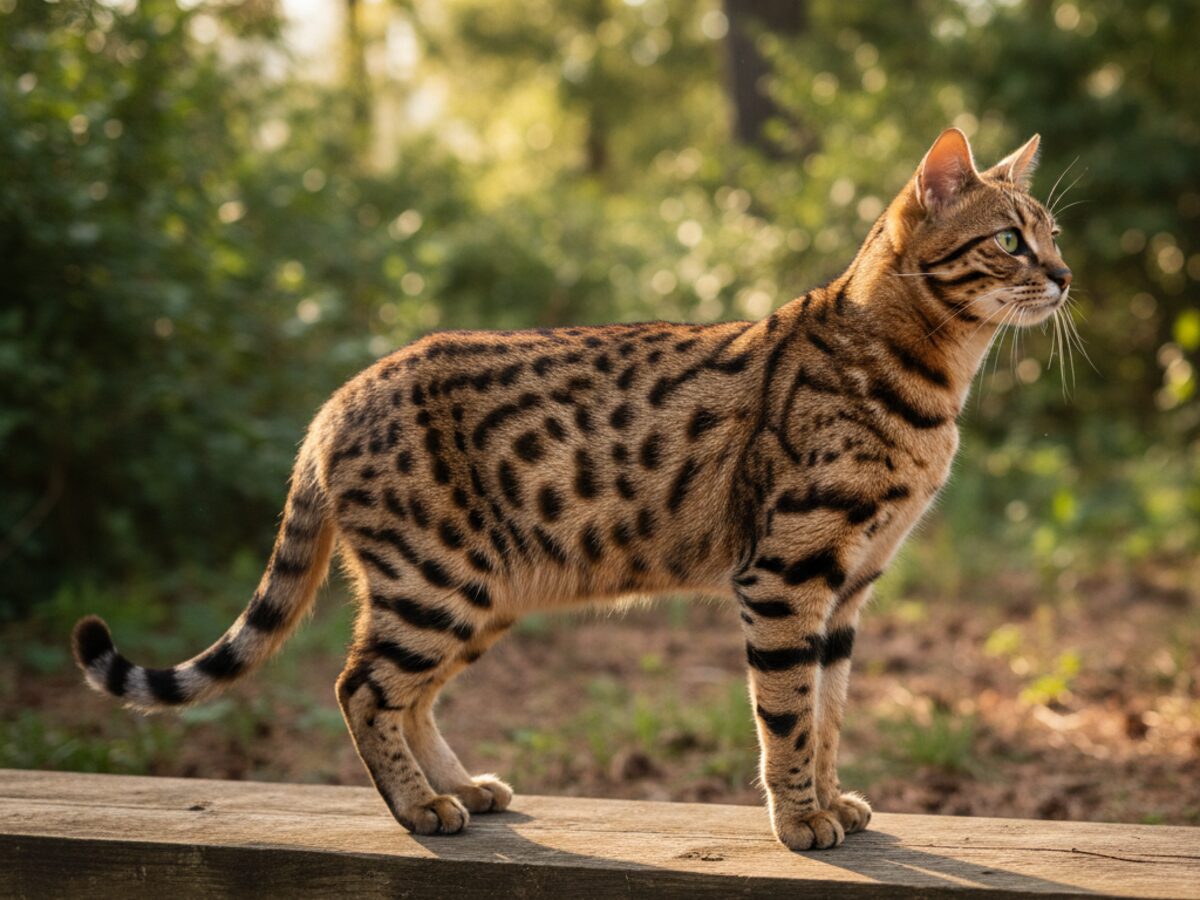
Key facts
- Size
- Medium
- Weight
- 3–7 kg
- Life expectancy
- 12–16 years
- Daily exercise
- 45 min/day
- Estimated total
- 95€/month
- Country
- United States
Character & temperament
Ocicats are known for being very intelligent, social, and playful cats, almost like small dogs in a feline body. They enjoy human interaction and can often be trained to fetch toys or even walk on a leash. They are extremely curious and love to be involved in everything happening in the household. Don't expect a cat that hides; the Ocicat wants to be the center of attention. They are known for their chattering and for "talking" to their owners, which gives them a very charming and unique personality. Their energy means they need a lot of stimulation, both physical and mental, so interactive toys and tall scratching posts are a must.
Living with children
Ocicats are excellent companions for children of all ages, including toddlers, as long as children are taught how to interact respectfully with the cat. Their playful and tolerant nature makes them ideal for active families. They enjoy playing fetch and chase, and their patience makes them a good companion even for the youngest ones. Initial supervision is always recommended, but once they form a bond, children and Ocicats can form a very special and lasting friendship.
With other pets
These social cats generally get along very well with other domestic animals, including dogs, as long as the introduction is gradual and positive. Their adventurous and fearless nature allows them to adapt to a variety of companions. They can live with other cats, and in fact, enjoy the company of other felines, which can help channel their energy. Make sure all animals receive individual attention to avoid jealousy.
Health & prevention
Ocicats are generally a healthy and robust breed, with an average lifespan of 10 to 15 years. However, like all breeds, they can be prone to certain genetic conditions inherited from their founding breeds. Health concerns to be aware of include hypertrophic cardiomyopathy (HCM), common in many cat breeds, and renal amyloidosis, which can be inherited from their Abyssinian ancestors. Progressive retinal atrophy (PRA) has also been observed in some lineages. It is crucial to choose a responsible breeder who performs genetic testing on their breeding cats to minimize the risk of these diseases. Regular vet visits for annual check-ups, vaccinations, and deworming are essential to keep your Ocicat in optimal shape. A balanced diet and plenty of exercise will also contribute to their overall well-being, helping to prevent obesity and maintain a healthy heart.
Health risks
- •Hypertrophic cardiomyopathy
- •Amyloidosis
Care
Nutrition
Since the Ocicat is an active cat, it needs a diet rich in high-quality protein to maintain its energy and muscle mass. Opt for high-quality commercial foods, both dry and wet, that list meat as the first ingredient. Portions should be controlled to prevent overweight, especially if your cat is not as active as it should be. Consult your vet for a personalized feeding plan based on your Ocicat's age, weight, and activity level.
Grooming & hygiene
Fortunately, the Ocicat is a **low-maintenance** cat when it comes to grooming. Its short, close-lying coat does not tend to tangle and only needs weekly brushing to remove loose hair and keep it shiny. This is also an excellent opportunity to bond with your feline. Check its ears regularly for dirt or signs of infection and clean them if necessary. Frequent dental brushing is important to prevent periodontal disease, and trimming its nails every few weeks is also crucial for its comfort and to protect your furniture.
Exercise & training
Exercise plan
Ocicats are **energetic** cats and need plenty of exercise to stay happy and healthy. They enjoy interactive games, feather toys, laser pointers, and play sessions with their humans. Consider investing in a tall cat tree with many levels and scratching posts, as they love to climb and observe from heights. They may also enjoy leash walks, especially if accustomed to them from a young age. Lack of stimulation can lead to destructive behaviors, so make sure they have plenty of opportunities to burn energy.
Training
Ocicats are very **intelligent** and **trainable** cats, which sets them apart from many other feline breeds. Their intelligence, combined with their desire to interact with their owners, makes them receptive to basic obedience training and tricks. You can teach them to fetch toys, respond to their name, and even walk on a harness and leash. Positive reinforcement, such as treats and praise, works best with them. Start training them young for the best results and to help shape good behaviors.
Monthly cost
These costs are monthly estimates and can vary depending on food brand, location, and individual cat needs.
Estimate for Spain, healthy adult cat. Varies by region and provider.
Pros & cons
Pros
- ✓Extremely social and affectionate
- ✓Playful and energetic, ideal for active families
- ✓Intelligent and easy to train
- ✓Adapts well to other animals
- ✓Low grooming maintenance
- ✓Unique and exotic appearance
Cons
- !Requires a lot of attention and play
- !Can be noisy and vocal
- !Needs constant mental stimulation
- !Does not tolerate prolonged solitude well
Ideal for
- • Active families with children
- • People looking for an interactive cat
- • Homes with other domestic animals
- • Owners who enjoy training cats
Not recommended for
- • People looking for an independent cat
- • Homes where the cat will be alone for long periods
- • Peace-lovers who do not want a vocal cat
How it fits each scenario
Yes, they can live in apartments if provided with enough stimulation and play. They are adaptable as long as their activity needs are met.
They are ideal for houses with gardens, but it is preferable that the garden be protected to avoid escapes or external dangers, as they are very curious.
They adapt well, but need access to shade and fresh water. Their short coat is an advantage.
They are not the best option for very cold climates due to their short coat. They will need extra protection and access to warm indoors.
Excellent. Their patience and playful nature make them suitable, but always with supervision to teach mutual respect.
Ideal. They will enjoy interactions and games with school-aged children. They can be great adventure companions.
Yes, if the new owner is willing to dedicate time to play and companionship. They do not require complex care, but they do require attention.
Yes, an experienced owner will appreciate their intelligence and be able to involve them in more advanced activities like feline agility.
Absolutely. This is the perfect match. They will greatly benefit from an active and participatory lifestyle.
Not ideal. They need a lot of attention and companionship. A very busy family may not meet their social and play needs.
They are not hypoallergenic. Their short coat does not mean they produce fewer allergens. Not recommended for people with severe allergies.
They are not the cheapest option, especially if acquired from a responsible breeder. Initial and ongoing costs should be considered.
Origin & history
The Ocicat's story begins in 1964 in Michigan, USA, when breeder Virginia Daly attempted to obtain an Abyssinian cat with Siamese points. To do this, she crossed a Siamese cat with an Abyssinian. In the second generation of this cross, a female appeared with an ivory color and golden spots, which they named Tonga and who was the first Ocicat. This cat was spayed and sold as a pet, but Mrs. Daly's father suggested registering the breed for its unique appearance, which led subsequent breeders to continue developing the line. The breed was officially recognized by the Cat Fanciers' Association (CFA) in 1987 and by The International Cat Association (TICA) in 1988.
Despite its name and appearance reminiscent of a leopard or ocelot, the Ocicat has no wild cat blood in its lineage; it's 100% domestic cat! This makes it like a superhero cosplay for your pet, as if it were "Catman" in your own home.
Frequently asked questions
Is the Ocicat a wild or exotic cat?▾
No, despite its wild appearance and its name, which evokes the ocelot, the Ocicat is a completely domestic cat breed, created through selective crosses between Abyssinians, Siamese, and American Shorthairs.
Are Ocicats good with children?▾
Yes, they are known for their patient and playful nature, making them excellent companions for children of all ages. They enjoy interaction and are very tolerant.
How much exercise does an Ocicat need?▾
Ocicats are very active and energetic cats, so they need daily play sessions, interactive toys, climbing trees, and, if possible, leash walks to satisfy their need for physical and mental stimulation.
Do Ocicats shed a lot?▾
No, their short, fine coat means they shed a moderate amount of hair. Weekly brushing is enough to keep shedding under control and their coat shiny.
Are Ocicats vocal?▾
Yes, Ocicats are known for being quite vocal and enjoy "conversing" with their owners. They have a variety of meows and chirps to express their feelings.
What coat colors can an Ocicat have?▾
Ocicats come in a wide range of colors, including tawny (black spotted), chocolate spotted, cinnamon spotted, blue spotted, lavender spotted, and fawn spotted, all with a distinctive spotted pattern. They can also have silver variants of these colors.
Similar family-friendly breeds

Bengal
8.4Mini-leopard looks with boundless energy. Loves water, climbs everything and needs constant enrichment: small flats without stimulation are a no.
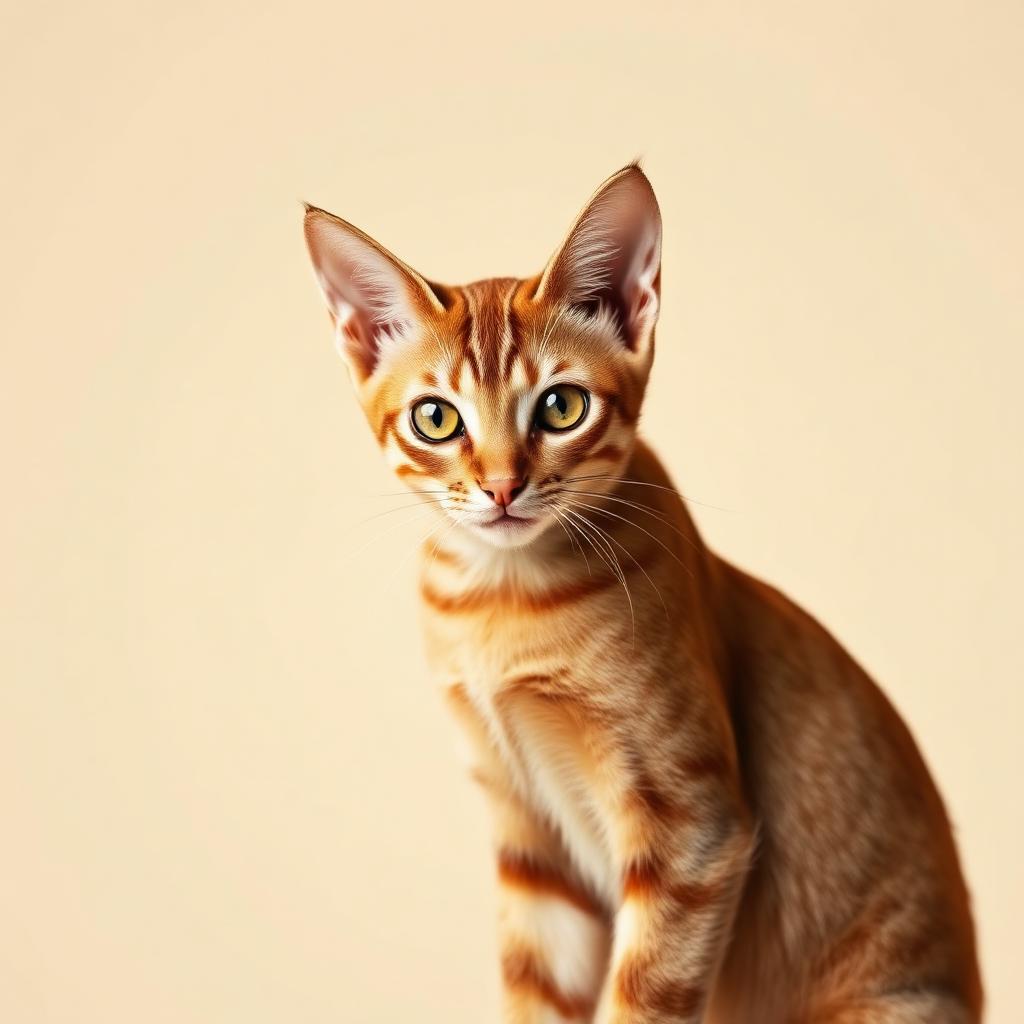
Abyssinian
8.5Sleek and athletic, like an Egyptian fresco come alive. Curious and restless: needs shelves, toys and a feline companion.
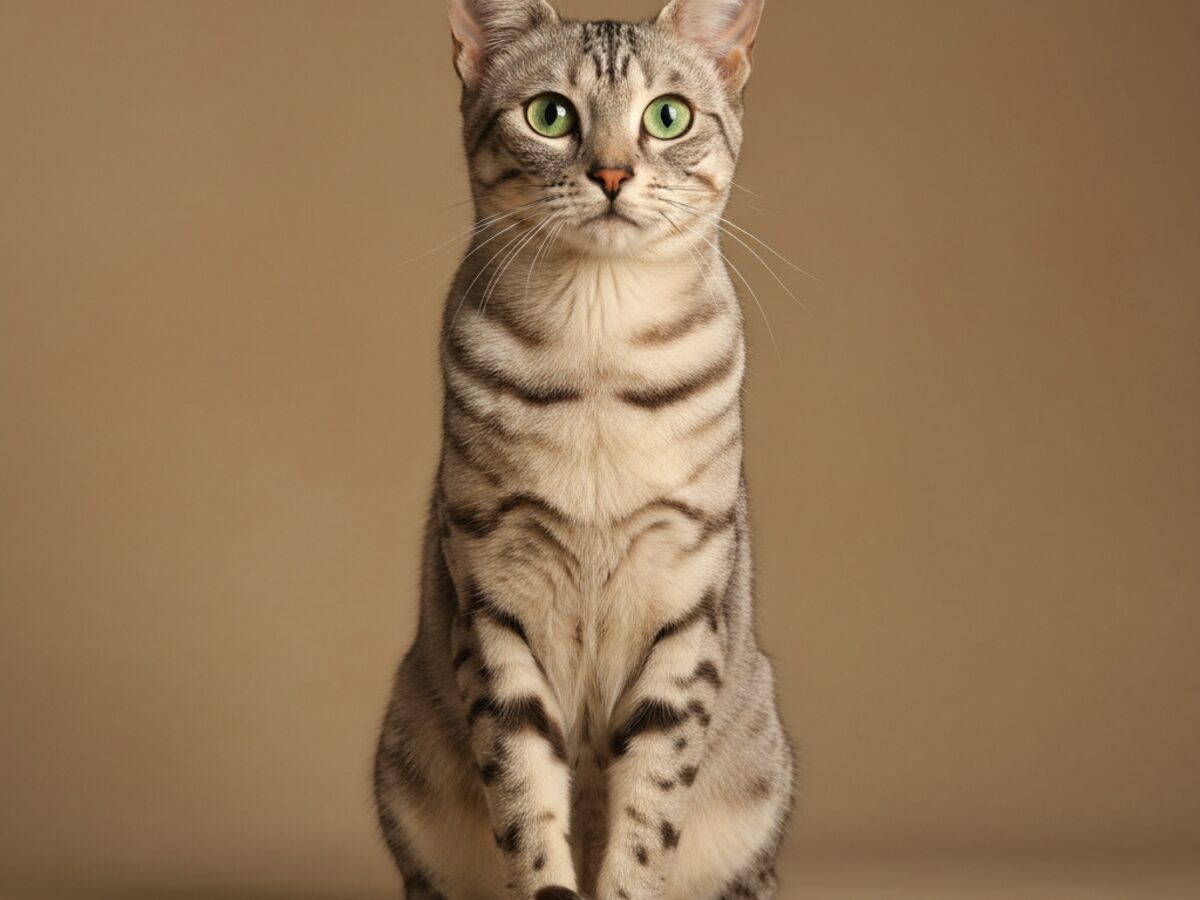
Egyptian Mau
8.5The only domestic cat with naturally spotted coat. A sprinter (up to 50 km/h), elegant and shy with strangers. Loves heat.