Teach your cat to sit
The first trick. Easier than it looks.
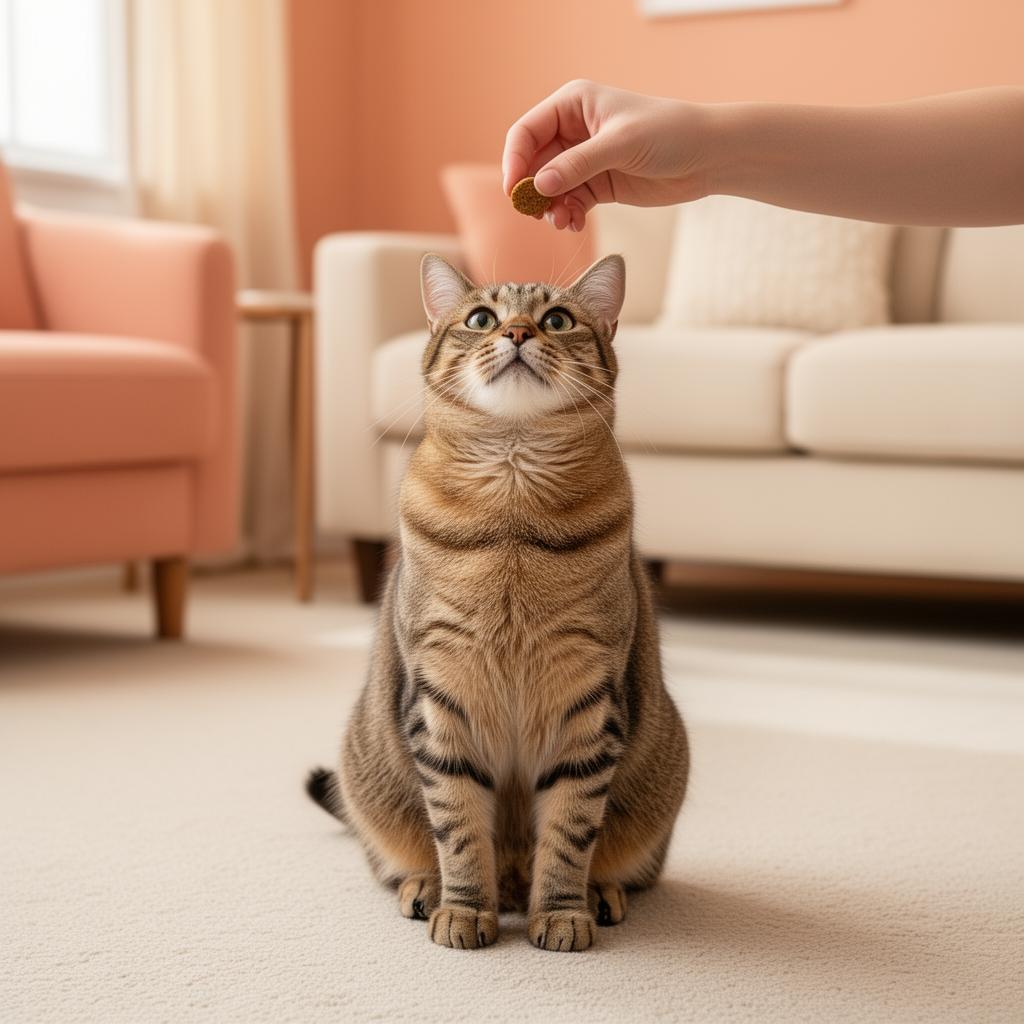
Yes, cats can learn to sit on cue. It takes 2-3 sessions and becomes the base for polite requests: before food, before play, before opening a door.
What you get
- Replaces demanding meows
- Calms anxious moments
- Foundation for high-five and lie-down
A cat that sits on cue is a cat you can negotiate with.
Before you start
- · Knows his name
- · Has a mild appetite
Materials
- · Small soft treats
- · Quiet place
Step by step
- 1
Get his attention
Call his name. When he looks at you, show a treat near your face.
- 2
Lure over the head
Hold the treat just above his nose and slowly move it backward. The body follows the nose and naturally lowers into a sit.
- 3
Mark and reward
The exact moment his butt touches the floor, say "yes" and give the treat. Timing is everything.
- 4
Add the cue word
After 5-6 clean reps, say "sit" just before doing the gesture. He'll link the word to the movement.
Common mistakes
- Pushing his butt down with your hand
- Repeating the cue if he doesn't respond
- Long sessions: after 3 minutes he loses interest
If something isn't working
Jumps for the treat
→ Lower the treat: it must be very close to the nose, almost touching.
Pro tips
- Ask for sit before putting down the food bowl: natural daily reinforcement.
- Train just before mealtimes.
Deep dive
Teaching a cat to sit is the foundational exercise of feline clicker training. It works on any breed, from the most active Siamese to the calmest Persian, and becomes the foundation for more complex cues. The key is reward timing and very short sessions.