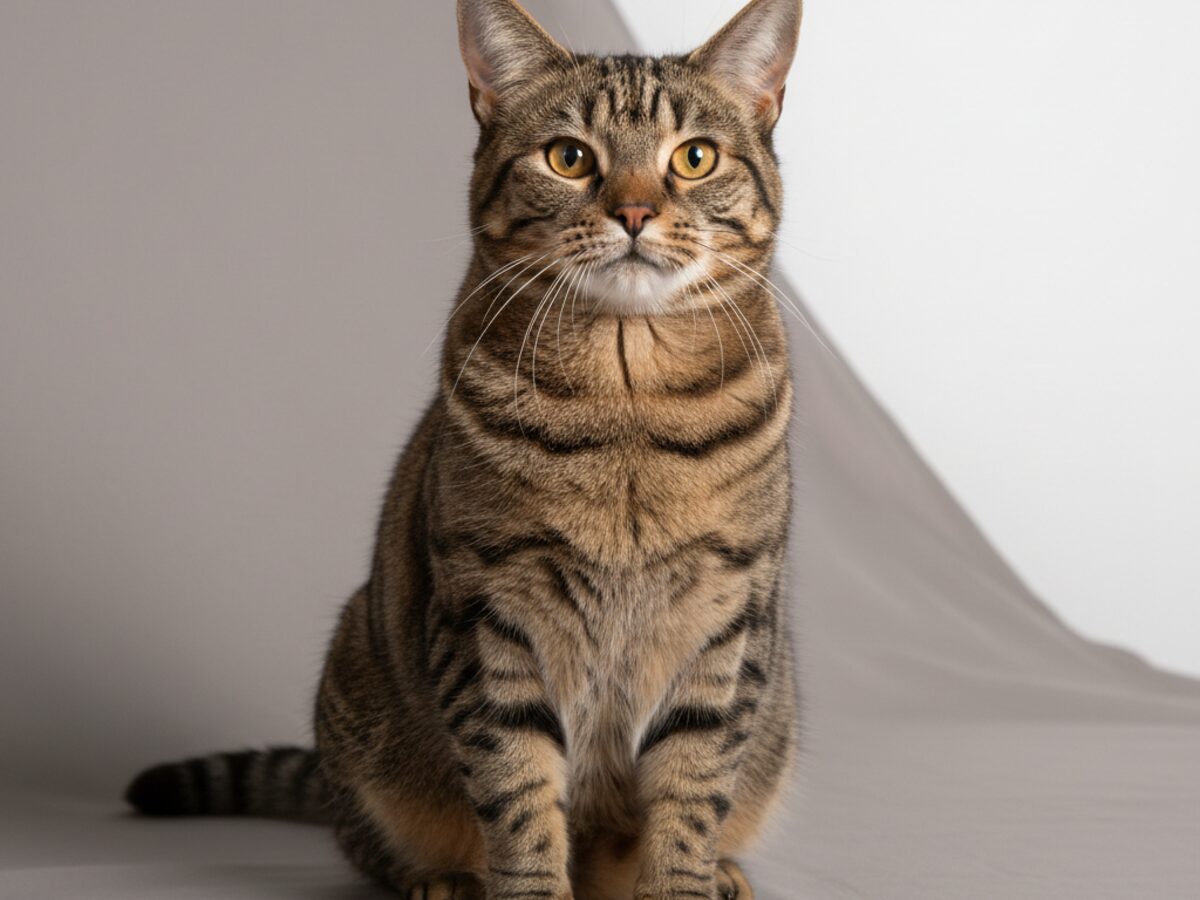
Pixie-Bob
"Pixie-Bob: The 'Domestic Bobcat' that will win you over with its wild heart and playful spirit!"
Overview
Discover the Pixie-Bob, the cat with a teddy bear heart and bobcat appearance, perfect for your family at FamiCats.com. Originating from the United States, this feline with a playful, loyal, and intelligent temperament has earned the nickname "dog-cat" for its ability to learn tricks, walk on a leash, and its deep loyalty to its humans. Its distinctive short tail and tabby coat give it a wild look that contrasts with its affable and sociable nature, making it ideal for homes with children of all ages and other pets. In this comprehensive profile, we will explore everything from its mysterious origins in the Cascade Mountains to its daily care needs, such as its easy grooming and its need for mental stimulation to stay happy and healthy. We'll give you all the keys to understanding why the Pixie-Bob is much more than a cat: it's another member of the family, ready to share adventures and fill your home with purrs and communicative chirps.
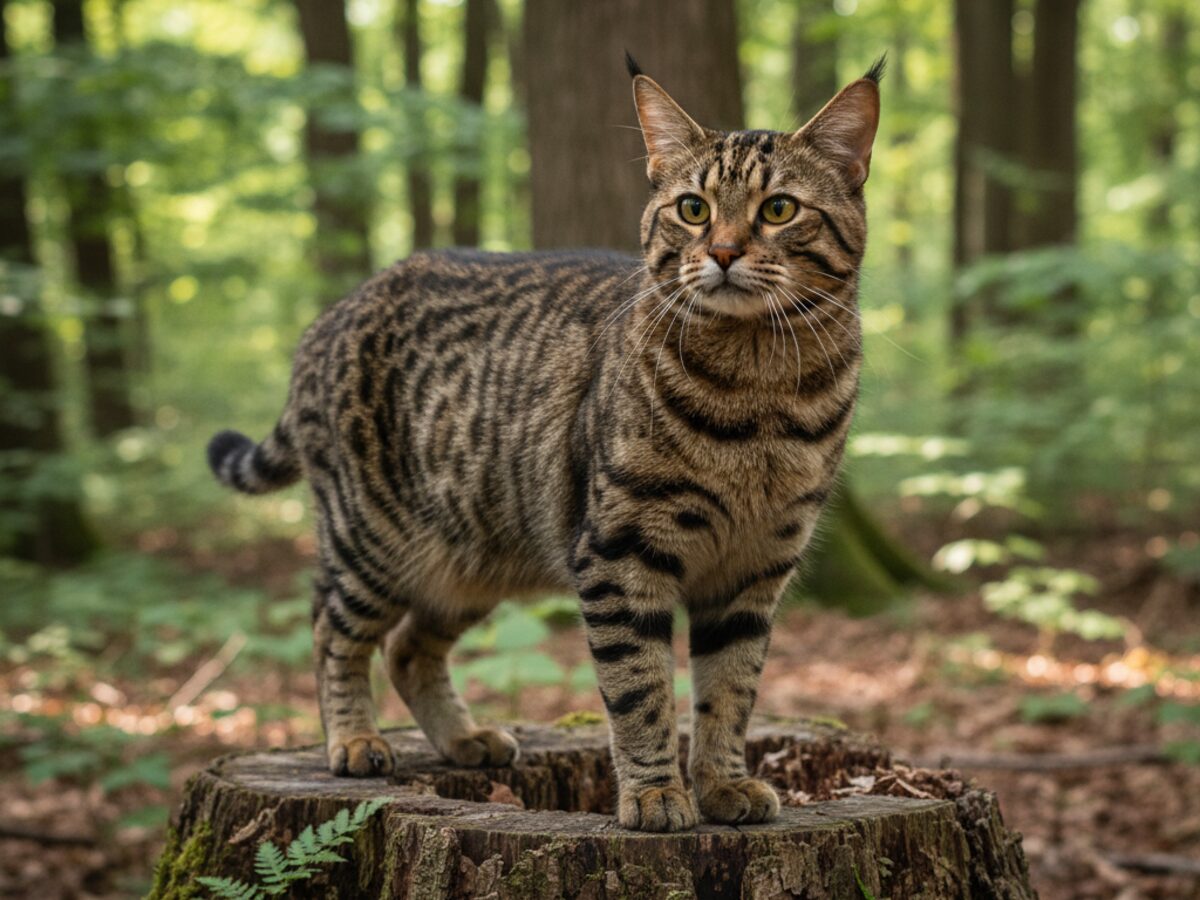
Key facts
- Size
- Large
- Weight
- 4–11 kg
- Life expectancy
- 13–16 years
- Daily exercise
- 30 min/day
- Estimated total
- 120€/month
- Country
- United States
Character & temperament
Despite their wild look, Pixie-Bobs are true teddy bears with paws. They are known for their friendly, affectionate, and loyal nature, making them ideal companions for the whole family. Many describe them as "dogs in cat bodies" due to their tendency to follow their humans from room to room, enjoy walks on a harness and leash, and be trainable to fetch objects or learn tricks. They are very intelligent and curious cats who love to participate in family activities and are famous for their great patience. They love to interact and are quite vocal, using a variety of soft meows, chirps, and purrs to "talk" to you, which adds an extra touch of charm to their personality.
Living with children
The Pixie-Bob is a gem for homes with children! Their patience and playful nature make them exceptional companions. They often form a very strong bond with the little ones in the house, tolerating even the most energetic games and actively participating in them. They are robust enough to withstand the affection and play of active children, and their intelligence allows them to quickly learn boundaries. It's important to teach children, especially younger ones (under 5), to interact with respect, but in general, a Pixie-Bob adapts wonderfully to family life.
With other pets
Sociability is one of the **Pixie-Bob's** greatest virtues. They generally get along very well with other domestic animals, including dogs and other cats, especially if introduced correctly from a young age. Their peaceful nature and desire for companionship make them good candidates for multi-pet households. They can even adapt to living with small animals like rabbits or guinea pigs, although always with proper supervision, as we must not forget their feline instinct. A **gradual and positive introduction** is recommended to ensure the best coexistence.
Health & prevention
The Pixie-Bob is considered a generally healthy and robust breed, with a life expectancy that can reach 13-15 years or more. However, like all breeds, they can be predisposed to certain conditions. It is important for breeders to perform genetic tests to detect hypertrophic cardiomyopathy (HCM), a common heart disease in cats. Polydactyly, the presence of extra toes on the paws, has also been reported; although it is a distinctive trait of the breed and usually causes no problems, extreme cases may require veterinary attention. A comprehensive annual veterinary check-up, a balanced diet, and weight control are advised to prevent diseases such as diabetes or joint problems.
Health risks
- •Dystocia
- •Polydactyly (breed trait)
Care
Nutrition
To keep your **Pixie-Bob** strong and healthy, a **high-quality diet** is essential. Opt for kibble and ingredients rich in animal protein, which are essential for their muscle development and energy. Avoid foods with excessive fillers or low-quality by-products. Also consider a wet diet to ensure good hydration. The amount of food should be adjusted to their age, activity level, and weight to avoid overweight, which could cause health problems. Your veterinarian can give you the best guidelines!
Grooming & hygiene
Grooming the **Pixie-Bob** is relatively simple, making them ideal for busy families. Their coat, which can be short or semi-long, does not tend to tangle easily and requires regular brushing, at least **once or twice a week**! This not only helps remove loose hair and prevent hairballs but is also a perfect time for bonding and affection. During shedding seasons, more frequent brushing will be appreciated. Additionally, it's important to check their ears and eyes periodically and trim their nails every few weeks, especially if they don't have surfaces to scratch naturally. And if they have extra toes (polydactyly), make sure those extra nails are also cared for!
Exercise & training
Exercise plan
The **Pixie-Bob** are active and playful cats who enjoy interaction. Although not hyperactive, they need daily activities to stay happy and fit. They love chasing toys, climbing scratching posts, and solving food puzzles. Due to their intelligence, games that stimulate their minds are very beneficial. Play sessions of **20-30 minutes, once or twice a day**, are sufficient to keep them entertained. And don't forget that many Pixie-Bobs love walking on a harness and leash, an excellent way to safely burn energy outdoors!
Training
Training a **Pixie-Bob** is a rewarding experience! Their intelligence and desire to please their humans make them very receptive to training. They can easily learn tricks, come when called, and even fetch objects, just like small dogs. **Positive reinforcement** (rewards, praise) works wonders with them. Many enjoy clicker training. Encourage them to play with interactive toys and solve puzzles to keep their minds sharp. And remember, patience and consistency are key to successful training.
Monthly cost
These are monthly estimates. The initial acquisition cost of a Pixie-Bob can range from 800 to 2000 euros, depending on the breeder and lineage.
Estimate for Spain, healthy adult cat. Varies by region and provider.
Pros & cons
Pros
- ✓Extremely friendly and loyal
- ✓Ideal for families with children
- ✓Gets along well with other pets
- ✓Intelligent and easy to train
- ✓Unique and exotic appearance
- ✓Relatively easy to groom
Cons
- !Needs a lot of social interaction
- !Can be vocal
- !Some can be very active
- !Requires mental stimulation
- !Risk of genetic conditions
Ideal for
- • Active families with or without children
- • People looking for a loyal and affectionate cat
- • Homes with other friendly pets
- • Owners willing to play and train
- • Those who enjoy vocal interaction
Not recommended for
- • People seeking a quiet, solitary cat
- • Homes where they will spend a lot of time alone
- • Those who cannot offer stimulation
- • Owners with a very limited budget
How it fits each scenario
With enough environmental enrichment and play, a **Pixie-Bob** can adapt well to apartment living, although a larger space is always preferable.
Ideal. A home with a secure garden (or an outdoor enclosure) is perfect for a **Pixie-Bob**, as they enjoy exploring and burning off energy.
They adapt easily. Their coat doesn't cause them problems in hot climates, but like all cats, they need access to fresh water and shade to avoid overheating.
Perfectly adapted. The **Pixie-Bob** coat, especially the semi-long variety, provides them with good protection against the cold.
Very good choice. Their patience and tolerant temperament make them excellent with small children, always with supervision to teach the children boundaries.
Excellent. They will become playmates and accomplices of school-aged children, enjoying interactions and active play.
Yes, they are a good option. Their adaptable and friendly nature makes them suitable for first-time owners who are willing to dedicate time to interaction and play.
Yes, if they enjoy an interactive and trainable cat, a **Pixie-Bob** is an excellent addition to a home with feline experience.
Very good option. A **Pixie-Bob** will thrive in an active family that can meet its needs for play, interaction, and mental stimulation.
It can work, but they need interaction time. A busy family will need to ensure they dedicate quality time for daily play and affection.
They are not hypoallergenic. While they don't produce as much dander as some other breeds due to their coat type, they can still cause reactions in people with severe allergies.
Not the best option. **Pixie-Bobs** have a high acquisition cost and require a quality diet, which can exceed a limited budget.
Origin & history
The story of the Pixie-Bob sounds straight out of an adventure movie. Its origins are said to trace back to 1985, on the slopes of the Cascade Mountains in Washington State, USA. A breeder named Carol Ann Brewer rescued a polydactyl male cat with a short tail that, according to her, looked like a wild bobcat. Later, she acquired a domestic tabby female with a similar appearance, and the result of their mating was a litter that included a female cat named "Pixie," who became the founding matriarch of the breed. Brewer was convinced that these cats were the result of natural crosses between wild bobcats and domestic cats, hence their very particular appearance. Although modern DNA analyses have not found genetic evidence of wild bobcats in the Pixie-Bob, their appearance is undeniably captivating.
Imagine this! It's rumored that one of the cats with the most similar appearance to a Pixie-Bob, due to its wild look and short tail, was the inspiration for some feline characters in animated movies... although it has never been officially confirmed!
Frequently asked questions
Can Pixie-Bobs live outdoors?▾
While they enjoy the outdoors, Pixie-Bobs are domestic cats and should primarily live indoors for their safety. A secure garden or catio (cat patio) is an excellent option for them to enjoy the outside in a controlled manner.
Are they really like dogs?▾
Many Pixie-Bob owners report that they are. They display dog-like behaviors such as following their humans, playing fetch, walking on a leash, and being very loyal. Although they are still essentially cats, they have traits reminiscent of man's best friend.
Do they need a lot of space to live?▾
Not necessarily, but they appreciate vertical enrichment (scratching posts, shelves) and interactive play. They can adapt to apartments if their play and stimulation needs are met. A running space is a bonus, not a strict requirement.
What does "polydactyly" mean?▾
Polydactyly is a common and accepted characteristic in the Pixie-Bob breed, meaning they have more toes than normal on their paws. They can have up to seven toes on each paw. It's a distinctive, generally harmless trait that gives their paws a "mitten"-like appearance.
Is their short tail natural?▾
Yes, the short tail is a natural and distinctive characteristic of the Pixie-Bob, genetically inherited. It is not the result of an amputation, but a trait that was sought to be preserved in the breed to resemble a bobcat.
Are they easy to find and adopt?▾
Pixie-Bobs are not as common as other breeds. Finding them may require researching reputable, specialized breeders. Adoption is possible but less frequent due to their purebred status.
Similar family-friendly breeds
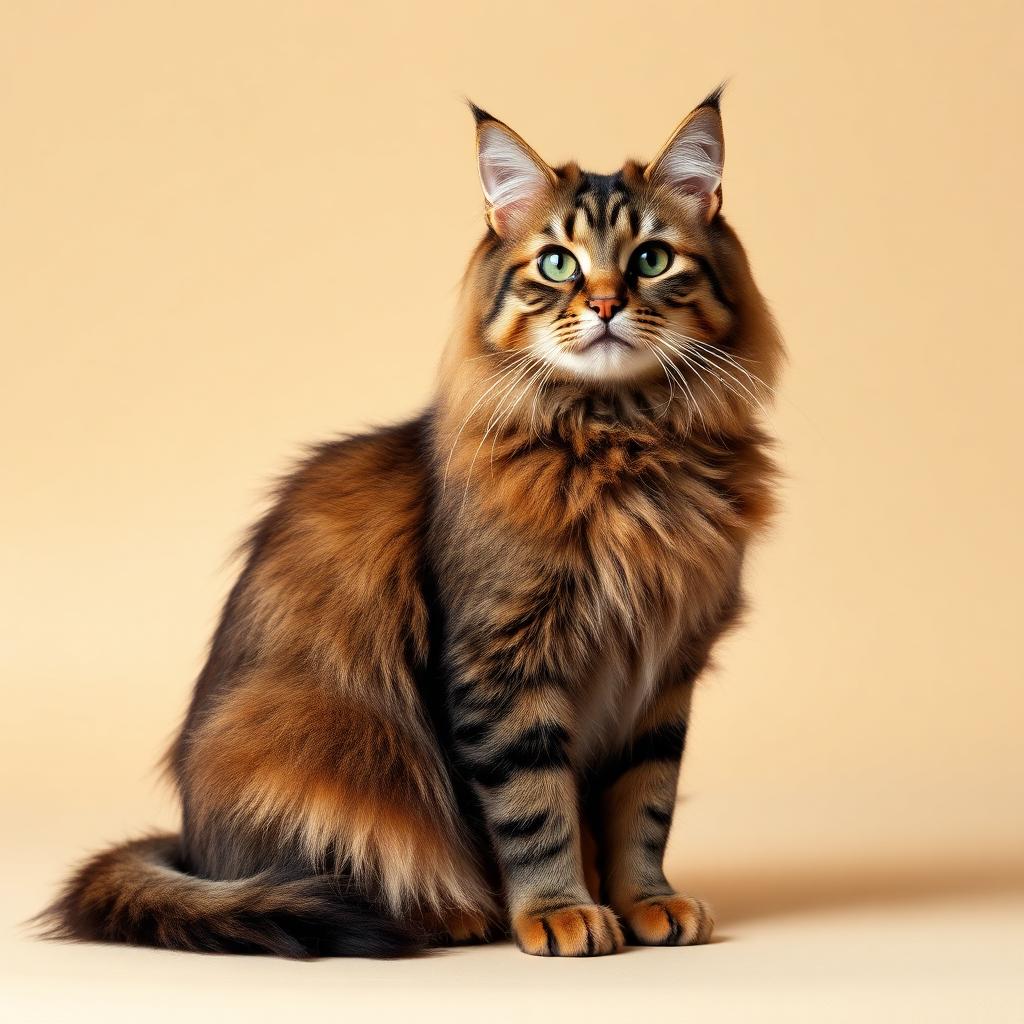
Maine Coon
9.7The gentle giant of the cat world: sociable, dog-like and very patient with kids. The semi-long coat needs brushing 2–3 times a week.

Bengal
8.4Mini-leopard looks with boundless energy. Loves water, climbs everything and needs constant enrichment: small flats without stimulation are a no.
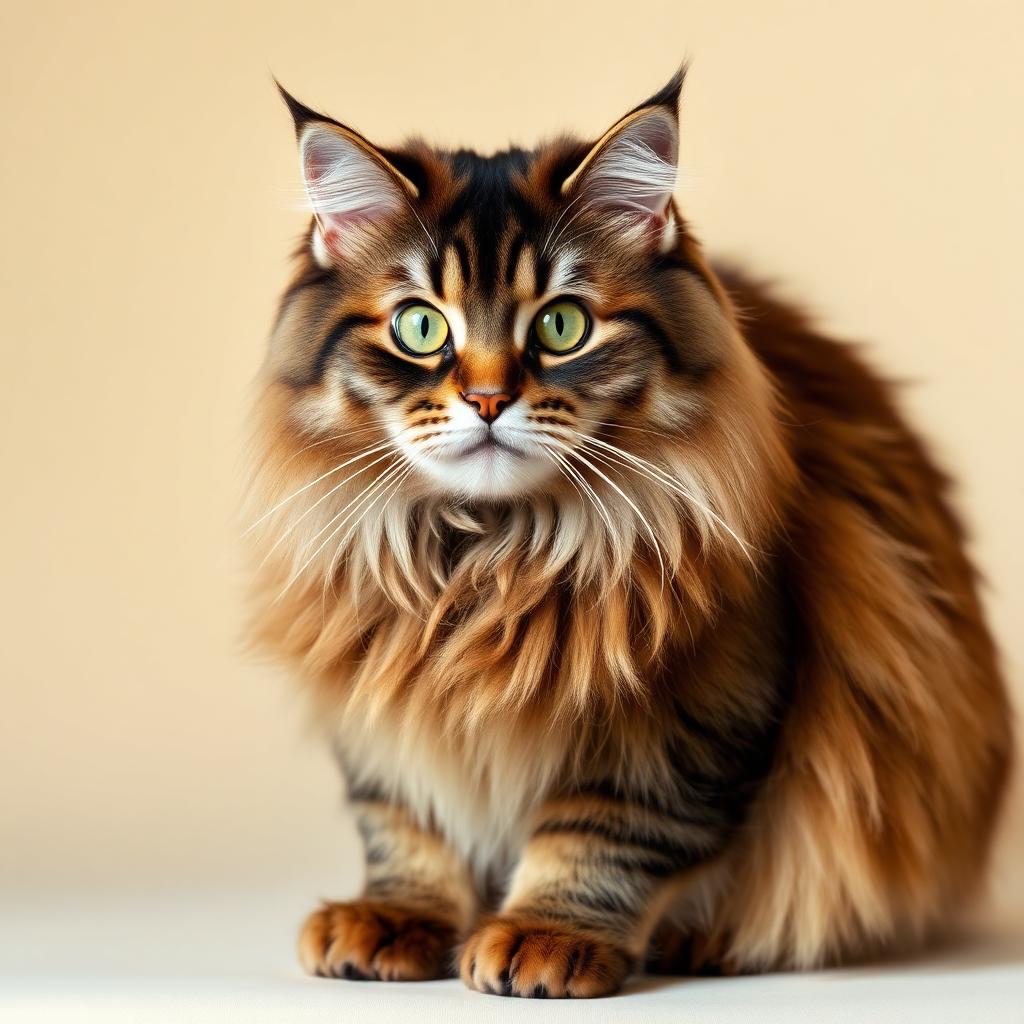 Hypoallergenic
Siberian
9.2Best option for allergy sufferers: produces less Fel d 1 than average. Sturdy, playful and very cold-resistant thanks to a triple coat.