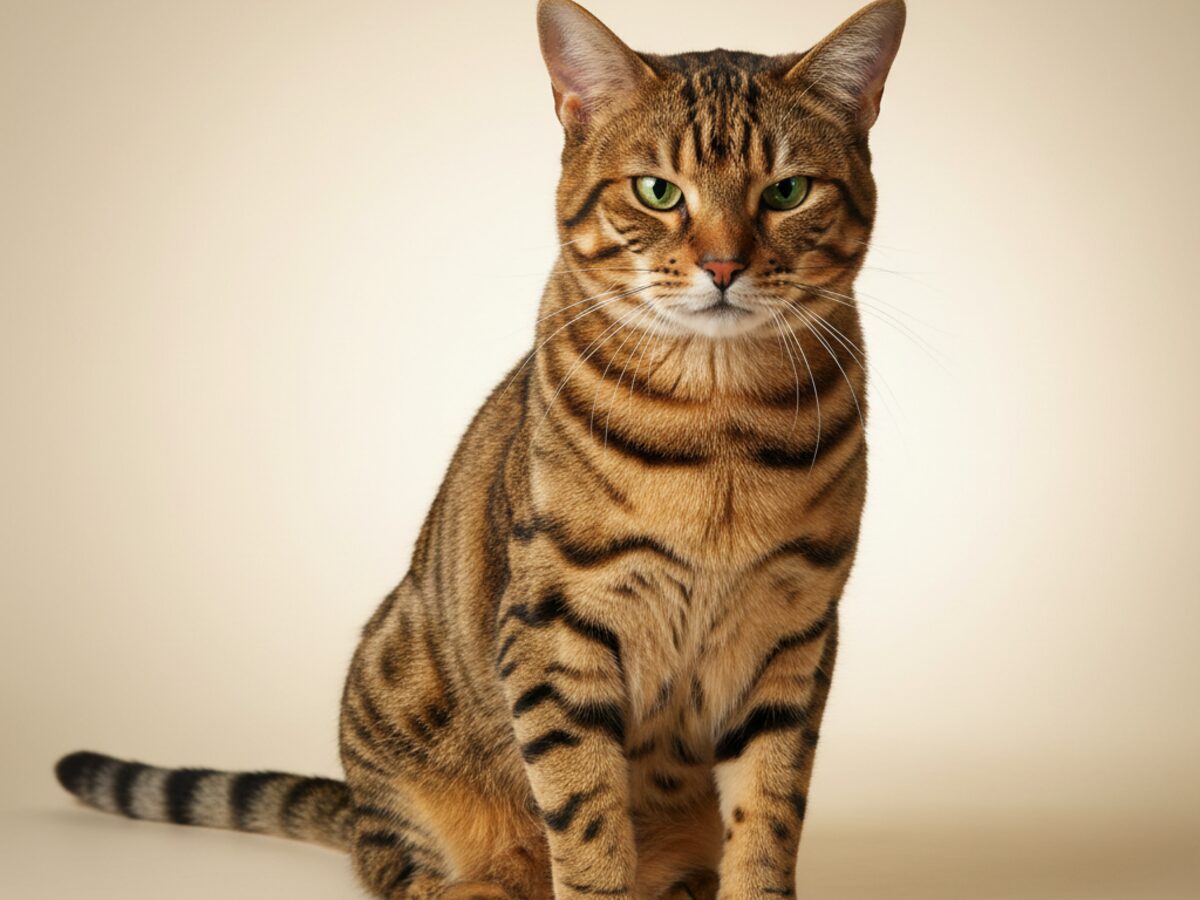
Toyger
"The mini tiger that purrs in your home! Elegant, affectionate, and playful."
Overview
The Toyger is much more than a striped cat; it's a living work of art, a designer breed created in the United States with the goal of bringing the majestic pattern of a tiger into a domestic, affectionate format. Its name, a fusion of "toy" and "tiger," perfectly encapsulates its essence: a playful companion with the exotic appearance of a big cat. Unlike other wild-looking breeds, the Toyger is the result of a selective breeding program of domestic cats, focused on perfecting its distinctive vertical stripes and athletic build. This breed has a fascinating history dating back to the 1980s thanks to the vision of Judy Sugden, who sought not only beauty but also a means to raise awareness about the conservation of their wild cousins.
For families looking for an interactive and visually striking companion, the Toyger is an exceptional choice. They are intelligent, sociable, and extraordinarily affectionate cats who thoroughly enjoy human company and participating in household activities. Their playful nature makes them excellent companions for children, provided they are taught to interact with respect. Additionally, they adapt well to living with other pets, including dogs, often forming surprisingly strong bonds. Their short coat is low maintenance, requiring only weekly brushing to keep it in optimal condition, making them ideal for those seeking a breed with low grooming demands.
From a behavioral standpoint, the Toyger is not your typical aloof cat; they are known for their desire for interaction, their ability to learn tricks, and even their enjoyment of leash walks, attributes that make them feel more like small dogs in a feline body. They need daily mental and physical stimulation, so providing interactive toys, cat trees, and structured play sessions is essential for their well-being. While their initial acquisition cost may be higher due to their rarity and the meticulousness of their breeding, the benefits of having a playful, affectionate, and low-maintenance "mini-tiger" make the investment worthwhile for many families. Their adaptable nature allows them to thrive in both apartments and houses with gardens, provided they receive the necessary love and attention.
Regarding health, they are generally a robust breed with a lifespan of 10 to 15 years, although, like any cat, they require regular veterinary visits and a high-quality diet. Choosing a responsible breeder who performs genetic testing is crucial to minimize hereditary risks. If your family is looking for a cat with a personality as vibrant as its coat, one that will be a true family member and a constant source of joy, the Toyger is a spectacular choice. Its exotic charm, combined with its sweet and playful temperament, makes it an unforgettable addition to any home.
Character & temperament
Despite their "mini-tiger" appearance, Toygers have hearts of gold. They are extremely friendly, affectionate, and playful cats who actively seek out the company of their humans. Don't expect a distant or aloof cat; the Toyger is an interactive companion who will enjoy participating in family activities, following their owners from room to room like a puppy. They love to cuddle, purr, and receive affection, solidifying their place as true family members.
Their intelligence is remarkable, and this, combined with their innate curiosity, makes them very receptive to learning. Many Toygers can be trained to walk on a leash, fetch objects, or even learn tricks. They are cats that need mental and physical stimulation, so interactive games, enrichment toys, and regular play sessions are essential to keep them happy and satisfied. They often show a mischievous side and a great sense of humor, guaranteeing laughter and unforgettable moments at home. They are known for their vocal nature, emitting a variety of purrs and meows to communicate with their families. In short, they are felines full of life and personality, making them an absolute joy.
Living with children
Toygers are an excellent choice for families with children, even for the littlest ones! They are tolerant, patient, and thoroughly enjoy interaction and play. Their playful nature perfectly matches the energy of children, and it's common to see them actively participating in play sessions with balls, feathers, or laser pointers. They are robust cats that can withstand the hustle and bustle of a child-filled home, as long as they are treated with respect and kindness.
It is essential to teach smaller children (ages 0-5) to interact gently with any pet, and the Toyger is no exception. Supervising initial interactions and guiding children on how to properly pet and play will help them build a strong and respectful bond. For school-aged children (6 and up), they can even get involved in training the cat with simple tricks, further strengthening their relationship and giving them a sense of responsibility. The key is to foster mutual respect and provide a safe and fun environment for everyone.
With other pets
Remarkable **sociability** is one of the Toyger's most outstanding characteristics. Generally, they get along very well with other pets, including other cats and dogs, provided that proper and gradual introductions are made. Their friendly nature and lack of aggression make them excellent playmates for other animals. It's not uncommon to see a Toyger cuddling with a dog or engaging in a chase session with another cat. However, due to their predatory instinct, albeit in a playful form, caution is recommended when introducing them to very small pets such as rodents, birds, or fish. While many Toygers can coexist peacefully, it's always best to supervise and ensure the safety of potential prey. Ideally, socialize them from a young age to ensure harmonious coexistence. A well-socialized Toyger will be a friend to everyone in the house.
Health & prevention
Toygers are generally a robust and healthy cat breed, with an average life expectancy of 10 to 15 years. Being a relatively new breed, hereditary genetic problems are not as well-documented as in other older breeds. However, like all cats, they can be susceptible to common feline conditions.
It is important for owners to be aware of any signs of heart conditions, such as hypertrophic cardiomyopathy (HCM), which is a common concern in many cat breeds. They may also be prone to certain deficiencies like pyruvate kinase deficiency, which affects red blood cells. Regular veterinary visits for annual check-ups, vaccinations, and deworming are crucial to keeping their health up to date. A balanced diet, regular exercise, and a stress-free environment will greatly contribute to their overall well-being and longevity. Buying from reputable breeders who perform genetic testing on their breeding cats can help minimize the incidence of hereditary diseases.
Health risks
- •Hypertrophic cardiomyopathy
Care
Nutrition
Toyger nutrition should be high-quality to support their active nature and growth. A diet rich in animal-based protein is recommended, either through premium dry kibble, wet food, or a combination of both. Look for formulas designed for active cats or large breeds, which provide all essential nutrients, vitamins, and minerals. It's important to control portions to prevent overweight, as even a playful Toyger can gain weight if overfed. Consulting your veterinarian to establish a proper feeding plan based on your cat's age, weight, and activity level is always the best option.
Grooming & hygiene
The Toyger, with its short, lustrous coat, is relatively **easy to care for** when it comes to grooming. A weekly brushing with a rubber glove or a soft brush is usually sufficient to remove loose hair and keep their coat shiny and healthy. This brushing not only helps reduce hairball formation but also provides an excellent opportunity to strengthen the bond with your pet and check their skin for any abnormalities. While they don't need frequent baths, occasionally, if they get very dirty, they may require one. Use a cat-specific shampoo. In addition to brushing, it's important to keep their nails trimmed with appropriate clippers and check their ears and teeth regularly. Regular dental cleaning can prevent oral health problems, and a set of quality scratching posts will help naturally wear down their nails. A well-groomed Toyger not only looks spectacular but also feels more comfortable and happy.
Exercise & training
Exercise plan
Toygers are energetic and playful cats who require regular exercise to stay fit and mentally stimulated. They love to run, chase, and jump, so daily play sessions are a must. Providing interactive toys like feather wands, jingle balls, or laser pointers (used in moderation to prevent frustration) will keep them entertained. They also enjoy tall scratching posts and cat trees, where they can climb and survey their kingdom. Some Toygers even enjoy harness walks outdoors, which provides excellent stimulation. Make sure they always have access to fresh water, especially after their lively play sessions.
Training
Thanks to their **intelligence and desire to interact**, Toygers are surprisingly easy to train. They respond very well to positive reinforcement, such as treats and praise. They can learn a variety of tricks, from sitting and coming when called, to fetching objects or even walking on a leash. Clicker training is a very effective tool with this breed. Start early, with short and fun sessions to keep their interest. Their curious nature also makes them suitable for food puzzle training, which challenges their minds and keeps them busy. A well-trained Toyger is an even more enriching and fun companion.
Monthly cost
These monthly costs are estimates and can vary depending on food quality, location, and individual cat needs. Initial costs for a Toyger kitten can be significantly higher, ranging from 1000 to 3000 euros, depending on the breeder and lineage.
Estimate for Spain, healthy adult cat. Varies by region and provider.
Pros & cons
Pros
- ✓Unique "mini-tiger" appearance
- ✓Extremely affectionate and sociable
- ✓Compatible with children and other pets
- ✓High intelligence and easy to train
- ✓Low grooming maintenance
- ✓Playful and active
Cons
- !Needs a lot of attention and stimulation
- !Can be vocal if bored
- !High acquisition cost
- !Still a relatively rare breed
Ideal for
- • Active families with children
- • People seeking an interactive and affectionate cat
- • Homes with other friendly pets
- • Owners willing to dedicate time to play and training
Not recommended for
- • People seeking an independent, solitary cat
- • Homes where the cat will spend a lot of time alone
- • Owners with a very limited budget for the initial acquisition
How it fits each scenario
Yes, the Toyger can adapt well to apartment living, provided they receive enough mental and physical stimulation through interactive games and enrichment toys.
Perfect, a Toyger will enjoy exploring a secure and fenced garden, which will complement their need for exercise and outdoor adventure. Supervision is key if it's not fully fenced.
Good, their short coat is an advantage, but like any cat, they need access to shade, fresh water, and cool environments to prevent overheating. Avoiding peak heat hours is advisable.
Acceptable, but their short coat doesn't offer much protection against extreme cold. They should remain mostly indoors during cold months and have access to warm spots.
Excellent, their patience and playful nature make them suitable for living with small children, always with supervision to teach gentle interactions.
Ideal, school-aged children can actively interact with a Toyger, participating in games and training, forming a great bond.
Good, if the first-time owner is willing to dedicate time to their socialization, play, and training, they will adapt very well. It requires commitment.
Excellent, an experienced owner will appreciate the Toyger's interactivity and intelligence, being able to fully exploit their potential with advanced training.
Perfect, a Toyger will thrive in an active family who can meet their need for play and exercise, integrating them into their daily activities.
Not ideal, Toygers need a lot of interaction and companionship. A very busy family that cannot dedicate time to them could lead to boredom or stress.
No, the Toyger is not a hypoallergenic breed. While they shed less than some cats, they still produce the allergens that cause reactions.
Not ideal, the initial acquisition cost of a Toyger is high, and while maintenance isn't the most expensive, the initial costs make them less accessible.
Origin & history
The history of the Toyger is fascinating and relatively recent. It was developed in the 1980s in the United States by Judy Sugden, the same breeder who co-founded the Bengal breed. Sugden's vision was to create a domestic cat that resembled a miniature tiger, not just in its stripe pattern, but also in its gait and movement. Crosses between a Bengal and a domestic shorthair cat with distinctive markings laid the foundation for the breed, with the goal of perfecting the stripe pattern and bone structure to evoke the majesty of a tiger. The name "Toyger" was coined by Sugden, combining "toy" and "tiger," to emphasize its domestic nature and exotic appearance.
Development continued until the breed was recognized by The International Cat Association (TICA) in 1993, initially for registration and then for full championship status in 2007. The Toyger is not a hybrid between a domestic cat and a wild tiger (that would be impossible!), but rather the result of a very careful selective breeding program among domestic cats with the desired characteristics. The primary goal was twofold: on one hand, to create an impressive feline with a tiger-like appearance, and on the other, to raise awareness about the importance of wild tiger conservation. Each Toyger is an ambassador for its wild cousins, reminding us of the beauty of wildlife.
Although it looks like a small tiger, the Toyger breed was created with the purpose of **inspiring the conservation** of wild tigers. Each Toyger is a miniature ambassador, reminding us of the beauty of their big cousins and the urgency to protect them. Perhaps one even inspired the tiger in 'Life of Pi'! Though, no, that's already fantasy.
Frequently asked questions
Is the Toyger aggressive?▾
Not at all! Despite its tiger-like appearance, the Toyger is an extraordinarily gentle, friendly, and very sociable cat. Its aggression level is very low, making it an excellent companion for families and other pets.
How long does a Toyger live?▾
Toygers have an average lifespan of 10 to 15 years, similar to many other domestic cat breeds. Good nutrition, regular veterinary care, and a stimulating environment can contribute to their longevity.
Does a Toyger need a lot of space?▾
While they are active, they adapt well to apartments as long as they receive sufficient playtime and mental enrichment. The most important thing is human interaction and stimulation, not necessarily a huge space.
Can Toygers live with dogs?▾
Yes, Toygers generally get along very well with dogs, especially if introduced properly and from a young age. Their sociable nature allows them to form strong bonds with other animals.
Are Toygers good for first-time owners?▾
They can be, provided the owner is willing to research and commit to their socialization and play needs. They are interactive and require attention, so they are not for someone looking for a totally independent cat.
Do Toygers shed a lot?▾
No, their short, tight coat means they shed a moderate amount of hair. Weekly brushing is enough to keep loose hair under control.
Similar family-friendly breeds

Bengal
8.4Mini-leopard looks with boundless energy. Loves water, climbs everything and needs constant enrichment: small flats without stimulation are a no.
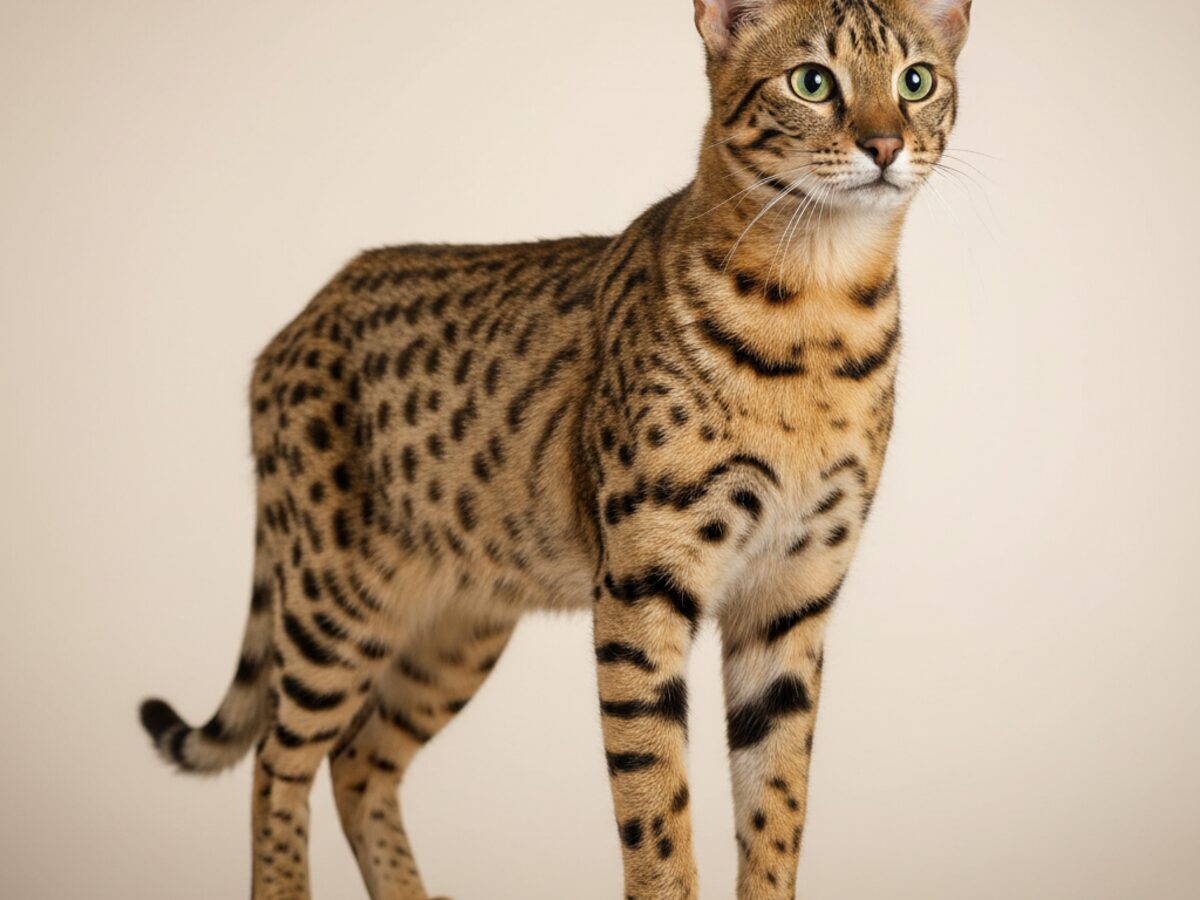
Savannah
7.8Hybrid with the African serval. Huge, athletic and demanding: not a "normal" cat. Check legality before adopting (F1-F4).
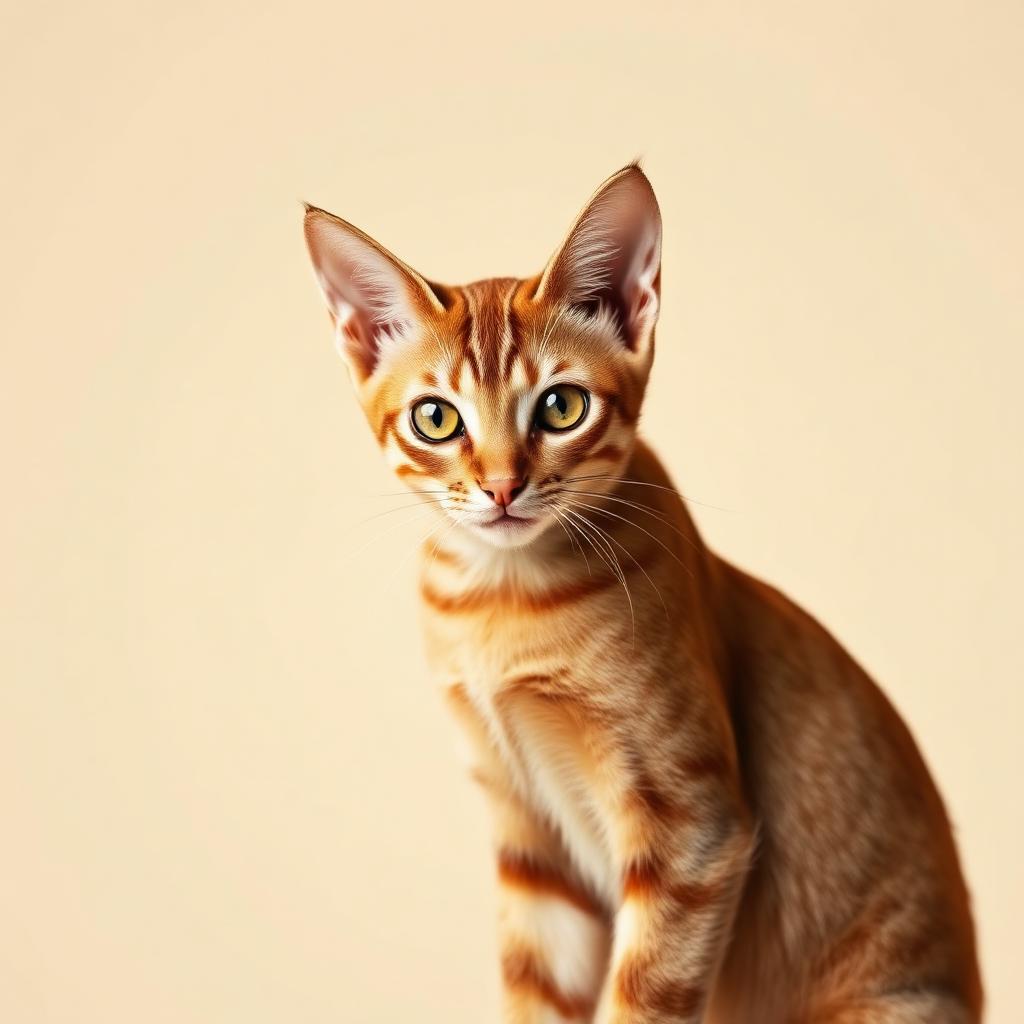
Abyssinian
8.5Sleek and athletic, like an Egyptian fresco come alive. Curious and restless: needs shelves, toys and a feline companion.